Facebook
 X
X
 Pinterest
 Copy Link
Inheriting or managing a property filled with a lifetime of belongings is rarely just a real estate transaction; it is a profound logistical and emotional undertaking. For many, the sheer volume of physical objects—ranging from cherished heirlooms to decades of accumulated “stuff”—leads to a state of paralysis. This clutter does more than occupy square footage; it stalls progress, delays market listings, and creates unnecessary friction among heirs.
The transition from a lived-in family home to a market-ready property requires a shift in perspective. By applying a structured, professional framework, what feels like an overwhelming “cleanout” can be transformed into a disciplined, manageable transition that honors the past while clearing a path for the future.
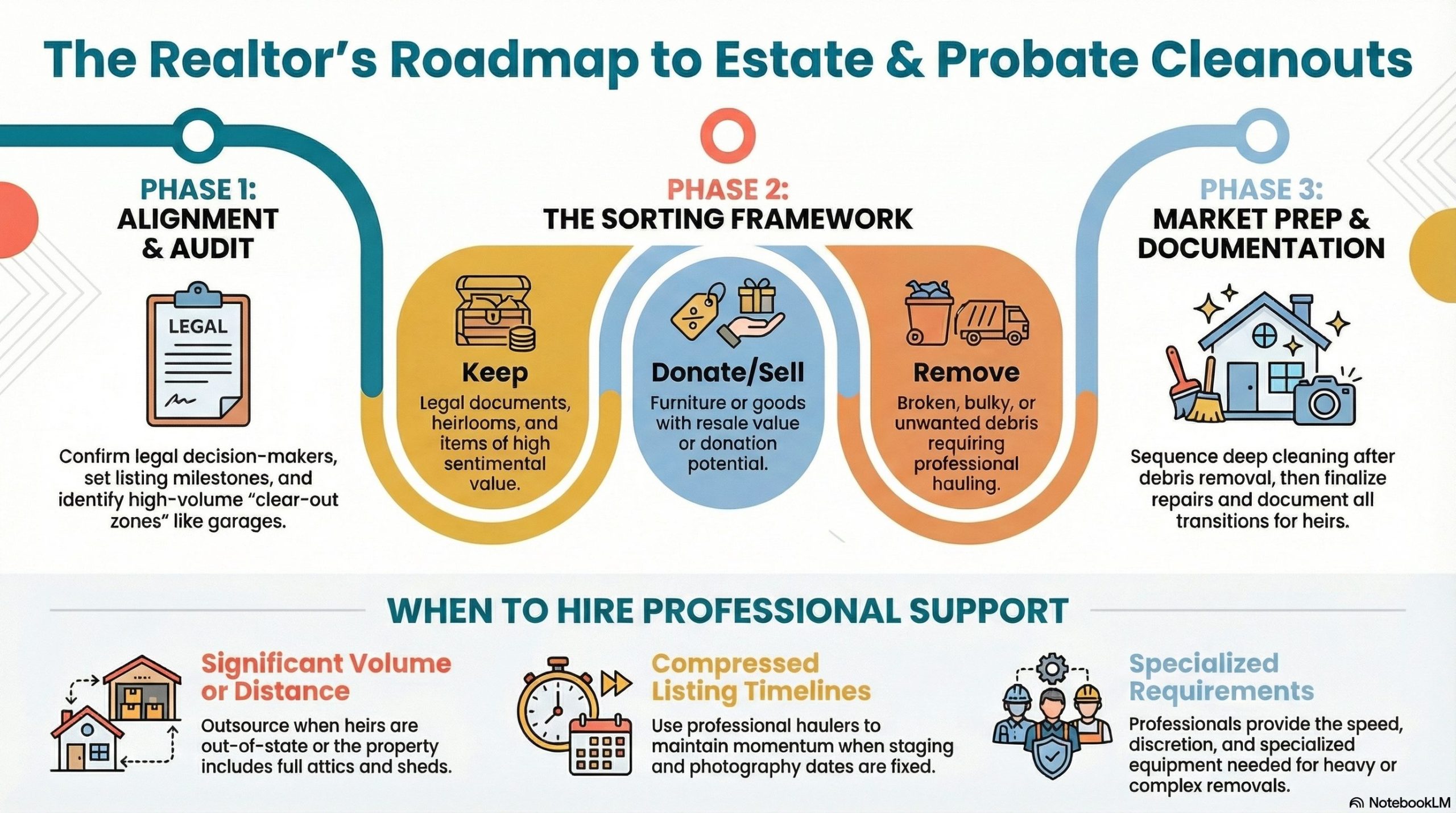
1. Identifying the Real Decision-Maker
The most common reason an estate cleanout grinds to a halt is not a lack of effort, but a lack of clarity regarding authority. Before the first box is packed, it is essential to identify who holds the legal and practical authority to make final decisions.
Aligning on the primary decision-maker—whether it is the Executor, an individual with Power of Attorney (POA), or a designated family lead—is the foundational step in avoiding “rework.” This alignment is what allows the project to stay on track for critical milestones, such as professional photography, staging, and the eventual listing date. Furthermore, establishing a system for tracking receipts and documentation early on ensures legal protection during probate and provides clarity for all heirs involved.
“Cleanouts often stall when ownership, timing, and ‘what stays vs. goes’ aren’t defined upfront.”
2. The “Zone” Strategy: High-Volume vs. High-Impact
To manage a project of this scale, one must stop viewing the property as a home and start viewing it as a “project site.” Once authority is established, the physical work begins with a tactical survey to categorize the property into specific “clear-out zones.”
- High-Volume Zones: These are areas like garages, basements, attics, and storage sheds. They typically contain the highest density of items—often requiring the most hauling support—but have the lowest immediate impact on the aesthetic quality of the home.
- High-Impact Zones: These are the rooms that affect property showings first, such as the kitchen, living room, and primary bedroom.
During this walkthrough, it is vital to identify safety concerns that could stall the process or endanger workers, such as mold, pests, sharp objects, or heavy items that require professional equipment to move. Addressing these hazards early prevents injury and ensures a smooth workflow.
3. The “Imperfect Sorting” Framework
A significant barrier to progress is the desire to sort every item with microscopic precision. In a real estate context, where the listing date is the primary driver of the timeline, speed is frequently more valuable than perfection. To maintain momentum, use a three-tier sorting system:
- Keep: Family keepsakes, legal documents, and items of significant financial or sentimental value.
- Donate/Sell: Items with resale potential or those that can benefit charitable organizations.
- Remove: Broken, bulky, or unwanted items that offer no value to the estate.
Sorting doesn’t need to be perfect to be effective. The goal is to move items off the property efficiently so that the professional work of cleaning and staging can begin. If the volume exceeds what a family can realistically handle, scheduling a removal partner early prevents lingering clutter from delaying the property’s debut.
4. The Essential Order of Operations: Clear First, Clean Second
A common mistake is attempting to repair or clean a home while it is still filled with furniture and debris. To ensure a predictable timeline, the sequence of operations should be non-negotiable: Clear, Clean, Repair, Stage.
- Clear: Remove the “heavy volume”—old mattresses, broken furniture, appliances, and garage overflow. Removing these bulky items creates the necessary space for the next steps.
- Clean: Once the surfaces, closets, and cabinets are cleared, a deep clean becomes significantly more effective.
- Repair: Patching, painting, and addressing fixtures are easier and safer to perform in a cleared space.
- Stage: Final decisions regarding staging can only be made once the property’s true potential and floor plan are visible.
5. The Dignity of Delegation
While many families attempt to handle a cleanout personally, there are specific triggers that suggest professional support is the more strategic choice. Professional hauling and removal services provide more than just physical labor; they offer discretion and speed during a sensitive time.
Professional delegation is particularly vital when:
- The listing timeline is exceptionally tight and requires immediate action.
- Heirs are living out of state and cannot manage the daily logistics.
- The volume of items is substantial, involving heavy debris or specialized removal needs.
Partnering with specialized services, such as 1-800-GOT-JUNK?, allows heirs to focus on the emotional and legal aspects of the transition. These professionals are equipped to handle the “heavy lifting” of mattresses, old appliances, and mixed debris, ensuring the property remains on track for a successful sale without the physical toll on the family.
Conclusion: The Gift of a Clean Slate
A disciplined cleanout process is more than a logistical necessity; it is a gift to everyone involved. By stripping away the weight of accumulated belongings through a structured plan and keeping meticulous records of the process, you create a “clean slate” that allows the property to be seen for its true value.
Ultimately, the goal is to move through a difficult transition with as much grace and efficiency as possible. As you look at the task ahead, ask yourself: Is the current path leading to a quick, respectful resolution, or is the weight of the “stuff” standing in the way of a necessary new beginning?
Ready to Move Forward with Confidence?
Navigating an estate/probate sale requires a strategic plan to maximize the home’s value. Jwon Martin—Your Essential Realtor—has been helping families across Chicago, the South Suburbs, and Northwest Indiana navigate complex real estate decisions since 2005.
Contact Jwon Martin today for:
- Exclusive Offer for NAR Members: Save $50 on professional junk removal to get your home show-ready. As my client you can save big and enjoy same-day service by using code RBNAR.
- Expert Guidance: Benefit from technical insight and strategic negotiation skills to move from uncertainty to clarity.
- Instant Home Values: Get a CB Estimate® to understand what the property is worth in today’s market.
- Seller Strategy Session: Discuss your goals and build a customized plan for listing and selling the estate.
Connect with Jwon Martin:
- Phone: (312) 772-5966
- Email: jwon.martin@cbrealty.com