
 Facebook
 X
X
 Pinterest
 Copy Link
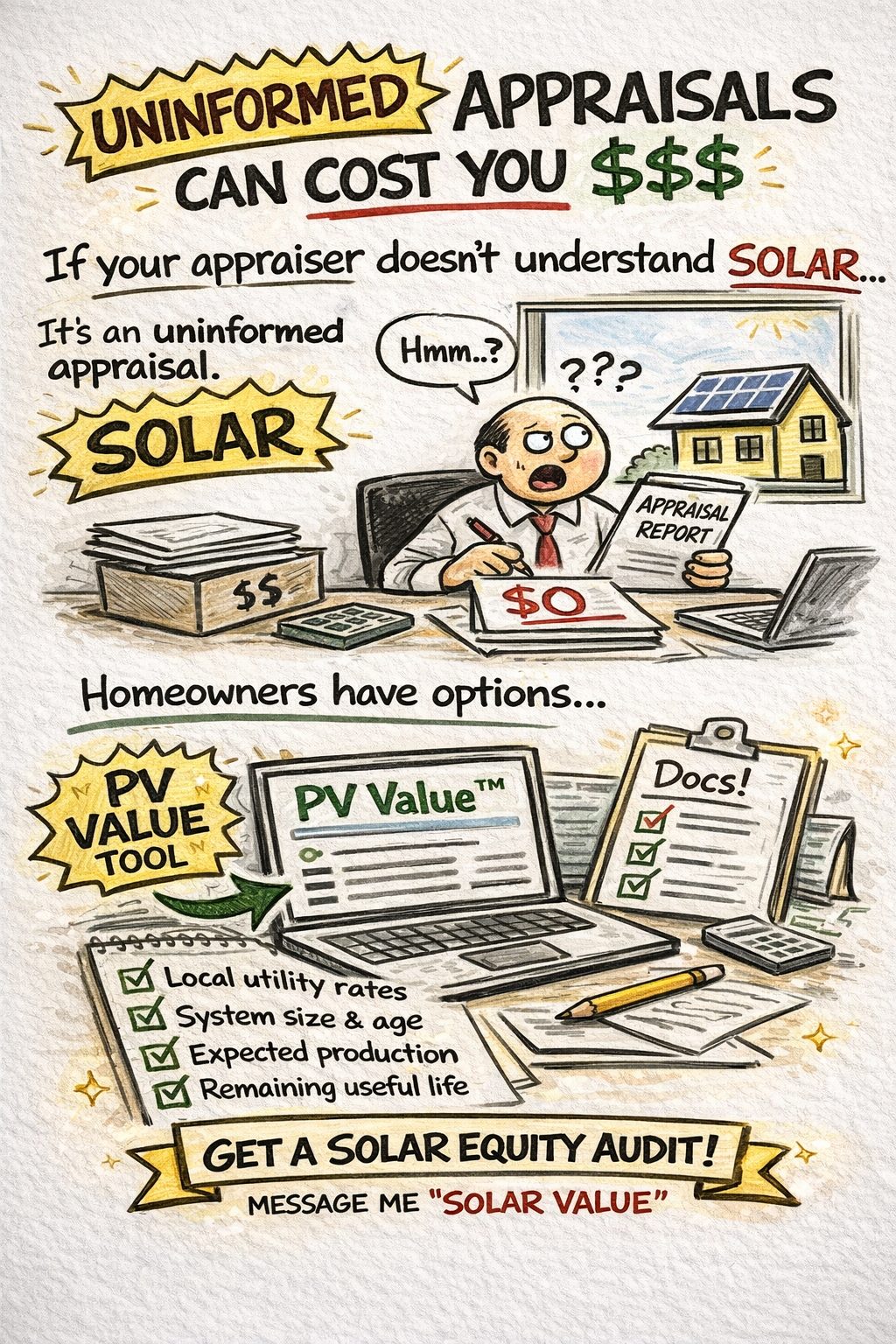
Solar panels are one of the most powerful home upgrades a homeowner can make.
They lower monthly utility bills, increase energy independence, and support cleaner living.
But when it comes time to refinance or sell, many homeowners are shocked to discover something unexpected:
Their solar system receives little or no value on the appraisal.
Not because the system lacks value.
Not because buyers don’t want solar.
But because the appraiser may not be trained to properly evaluate solar energy systems.
Let’s explore why appraiser training matters—and what you can do to protect your solar equity.
How Appraisers Determine Value
Appraisers estimate a home’s market value by analyzing:
- Recent sales of comparable homes
- Property size, condition, and features
- Permanent improvements and upgrades
- Market trends and buyer demand
For an upgrade to add value, it must be:
✔ Permanent
✔ Owned by the homeowner
✔ Supported by market evidence
✔ Documented and verifiable
When those elements are present, appraisers can assign contributory value.
When they are missing—or misunderstood—value is often lost.
Why Solar Is Often Misunderstood
Solar systems are still considered “new” compared to traditional home features like kitchens or HVAC systems.
Many appraisers:
- Have limited training on renewable energy systems
- Are unsure how to interpret solar production data
- Do not know which tools or methods to use
As a result, they may default to assigning zero contributory value even to high-performing, owned solar systems.
This isn’t a solar problem.
It’s a valuation knowledge gap.
What PV Value Is
PV Value is a specialized valuation tool designed specifically for solar.
It estimates the contributory value of an owned solar system based on:
- Local utility rates
- System size and age
- Expected annual production
- Remaining useful life
- Degradation rates
Instead of relying on guesswork, PV Value produces a data-backed report that can support appraisal and listing price discussions.
Think of it as a bridge between solar performance and real estate valuation.
How Homeowners Can Prepare
Homeowners can take proactive steps to protect solar value:
- Confirm system ownership status
- Gather installation contracts and invoices
- Collect panel and inverter specifications
- Save warranty documents
- Download monitoring reports
- Keep at least 12 months of utility bills
Providing this information upfront helps appraisers understand what the system is, how it performs, and why it matters.
Preparation equals protection.
How the Solar Equity Audit Helps
The Solar Equity Audit is a complimentary review designed to simplify this entire process.
It helps homeowners:
- Verify ownership and lien status
- Identify missing documentation
- Determine whether PV Value reporting is appropriate
- Understand valuation opportunities
- Create a clear action plan
Instead of hoping solar is recognized, you gain clarity and control.
The Bottom Line
Solar can be a powerful wealth-building asset.
But only when it is:
Owned.
Documented.
Properly Valued.
If you have solar—or are considering buying or selling a solar home—make sure your investment is positioned to receive the value it deserves.
Your solar is an asset.
Let’s make sure it’s treated like one.
